Story Mode Controversy --REDUX

The reason it's important is because if you either think all such depictions are bad and I can write off this thread as being unrealistic in expectations or you don't agree they are bad and you are biased in your ideology and you are not holding everyone to the same standard.

I have no issues deciding whether something breaks my moral compass and is racist. I take into account motive, context and other factors such as time and place. For example a stand up comedy special with taboo topics might be offensive or racist but in the context of a stand up comedy it's purpose isn't to deride. Also I do not agree the story of a Native American that owns a casino is racist or bad in itself nor if he is an antagonist. I think such notions of lazy Native Americans are antiquated and an opinion wouldn't form or change due to their portrayal in 7D2D.

I understand what you are saying. I just don't agree with the premise.
my guy, if the only answers you will accept are answers you've already decided are worthless and therefore are ones in which you've "won" preemptively then you aren't looking for answers you are looking for justification.

The thread stems from ideology. It's the entire point.
if this is your honest feeling on the matter then anything i or anyone else says will be too insubstantive to convince you to change your mind.
 
It was like "the wave" that spectators at sports events often do to show support or celebrate a great play. The Tomahawk Chop was a similar type of move that fans of the Kansas City Chiefs and Atlanta Braves would do and because of criticism, the action has been downplayed and modified. They used to beat drums and do warlike chants and basically act like stereotypical Indian warriors.
ok well it being sports is certainly why i was out of the loop. the only time i was ever invested as an adult was right after old lizzie died and the lads cheering during the rovers and djurgårdens game decided to bring it up and i know for an absolute fact that telling what i thought of it would get me kicked from this thread so i will leave it at that x''D
 
It's not that the Duke is a "bad guy." It's that he embodies pre-existing, real-life racial stereotypes about Native Americans, specifically the "Casino Indian" stereotype (and to some degree the "Ignoble Savage" stereotype).

There are plenty of ways to make a Native American the bad guy without using these stereotypes.

As to my goal: Plenty of people (American or not) don't realize that these are racial stereotypes. My hope is that The Fun Pimps also don't want the plot of their game to be racist (because they're not racist), so when they realize it is, they will voluntarily go in a different direction.

So then they should change the traders in the game as well no? 3 of them embody pre-existing, real-life racial stereotypes about whites; a bunch rednecks. And the only woman there seems to be treated as eye candy for men. I'm sure not every person living in Arizona is like that, yet the game makes it seem otherwise. I haven't seen any others in the game, and those that are coming will be bandits not friendly survivors. What if the bandits will be black? 😲
 
my guy, if the only answers you will accept are answers you've already decided are worthless and therefore are ones in which you've "won" preemptively then you aren't looking for answers you are looking for justification.
I didn't say they were the only ones. I said if those were your reasons then I can deduce my own conclusion. I offered, for example, an alternative perspective that you can take each item individually and determine what is offensive. Though I find it telling no one has answered whether those concepts were problematic or not.
if this is your honest feeling on the matter then anything i or anyone else says will be too insubstantive to convince you to change your mind.
I think you are not understanding the definition of ideology. Your beliefs shape your opinions or are you suggesting it is Mala in se?
Post automatically merged:

So then they should change the traders in the game as well no? 3 of them embody pre-existing, real-life racial stereotypes about whites; a bunch rednecks. And the only woman there seems to be treated as eye candy for men. I'm sure not every person living in Arizona is like that, yet the game makes it seem otherwise. I haven't seen any others in the game, and those that are coming will be bandits not friendly survivors. What if the bandits will be black? 😲
This is also why these topics are difficult to discuss because every person has their own moral compass.
 
So the main difference for you

Not "for me."

You keep thinking that what you're arguing against are just my opinions.

The "Casino Indian" stereotype is not my opinion. The character of the Duke, as expressed in the game files, is not my opinion.

Maybe you should follow your own advice and go read the posts I linked... there are a lot of them, take your time. ;)

Excellent idea!

Indictment in connection with Twentynine Palms Band casino

This is a 2012 story about a (non-Native) lawyer who was hired by the Coachella Valley Indian Tribe, and how he conspired with others to defraud the tribe. It basically involved convincing the tribe to hire his co-conspiraters, after which they would give him kickbacks.

This was not an example of Native Americans criminally exploiting their positions inside the casino business.


USDOJ: US Attorney's Office - WAW

This is a 2007 story about the "Tran Organization" conspiring to cheat casinos across the country out of millions of dollars. Many of them were tribal casinos, but many were not. The scheme involved bribing card dealers to create "slugs" and "false shuffles" so they could count cards easier. None of the "Tran Organization" themselves worked for any of the casinos.

This was not an example of Native Americans criminally exploiting their positions inside the casino business.


Tribes Discover The Two Sides Of Gambling Coin Corruption Following Prosperity's Footstep Onto Reservations

This is a 1996(!) story about the in-fighting and internal struggles of various tribes to deal with the management of their then-new casinos. Yes, there was a lot of mismanagement and corruption - thirty years ago - but even the article itself suggests it did not apply to the majority of native casinos.

A lot has changed in thirty years. For example, that was before the formation of the Indian Gaming Working Group in 2003: https://www.nigc.gov/wp-content/uploads/2025/02/2004-2-.pdf (PDF)

But, though it was thirty years ago, this was an example of Native Americans criminally exploiting their positions inside the casino business.


Former Tribal Casino Supervisor Pleads Guilty to $300K Embezzlement

This is a 2021 story of a front desk manager who, over many years, embezzled hundreds of thousands of dollars from a casino run by the Bois Forte Band of Chippewa. The tribal police significantly assisted in the investigation.

Though she worked at the casino, she apparently was not Native American:
An employee who wishes to remain anonymous worked with Boutto and confirmed Buotto is not a Bois Forte tribal member and worked as a front-desk employee at the resort. https://nativenewsonline.net/curren...ee-charged-in-federal-court-for-embezzlement/
So, this was not an example of Native Americans criminally exploiting their positions inside the casino business.


Guilty: Former Paskenta Tribal Leaders Admit Stealing Casino Money

This is a 2019 story about former tribal leaders in the Paskenta Band of Nomlaki Indians who, in the words of an IRS agent, "used the Tribe's accounts as their personal piggy banks." It seems to be a straightforward embezzlement case.

So, this was an example of Native Americans criminally exploiting their positions inside the casino business.


Dealt in the desert: Operation Royal Flush and Arizona’s gambling past | Arizona Capitol Times

This is a weird article.

The 2025 gaming-related arrests, called Operation Royal Flush, had absolutely nothing to do with casinos, tribal or otherwise. It involved 31 suspects across 11 states, including NBA players and members of La Cosa Nostra. The crimes were complicated fraud schemes at illegal high-stakes poker games.

Here's the DOJ's press release:

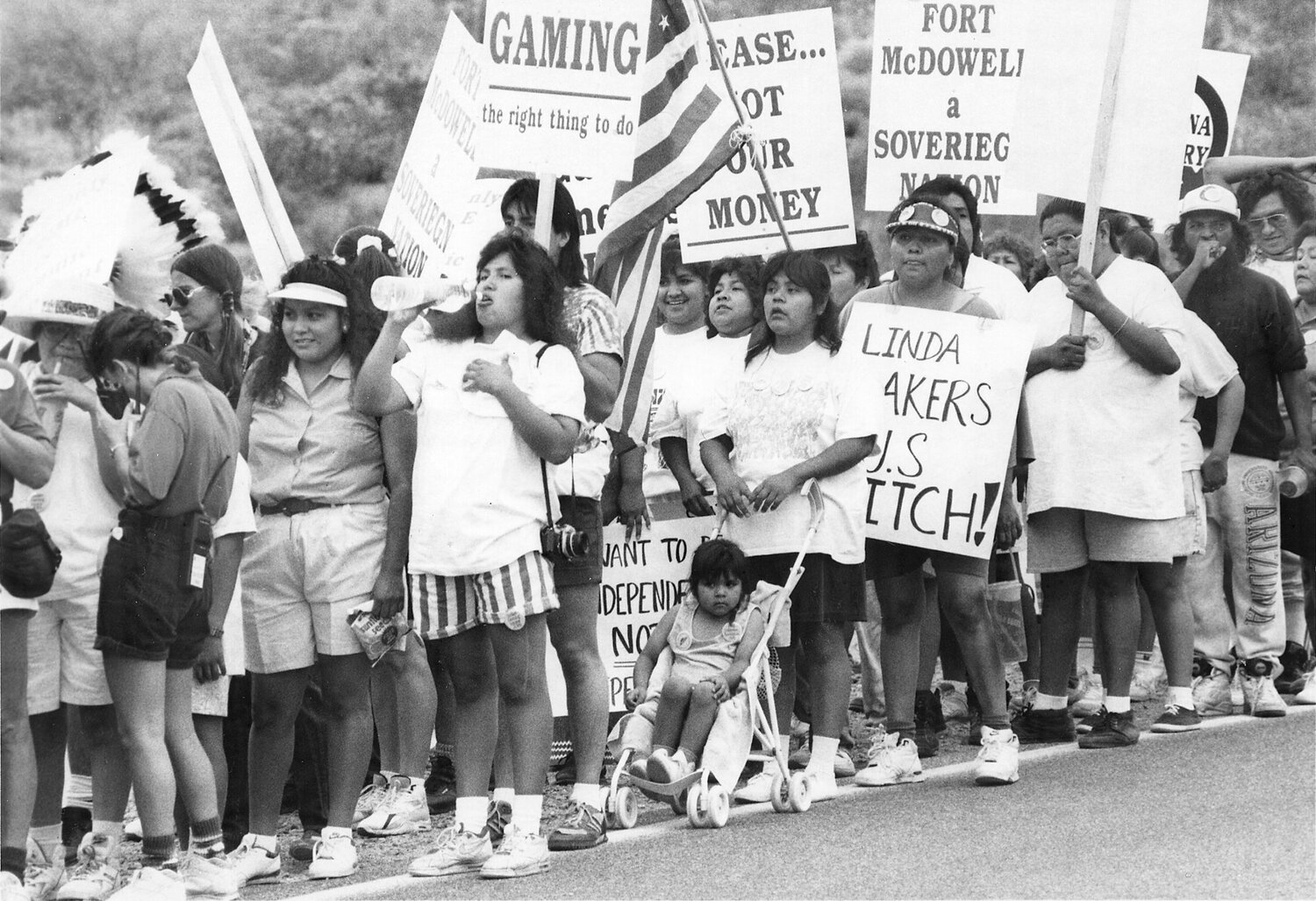
But the article, for whatever reason, lumps this in with a 1992 standoff between the Yavapai Nation and federal agents trying to seize their slot machines. This turned into a three-week protest and sit-in, and eventually involved Native Americans from other tribes. Afterwards, the governor agreed to a compact with the Yavapai, which meant they were cleared to have slot machines (though the original machines were still confiscated).

Here's another account of that incident:

Other than gambling, the two incidents are completely unrelated.

So, this was not an example of Native Americans criminally exploiting their positions inside the casino business.


This Arizona tribal chairman is the subject of a federal probe. But it’s unclear why

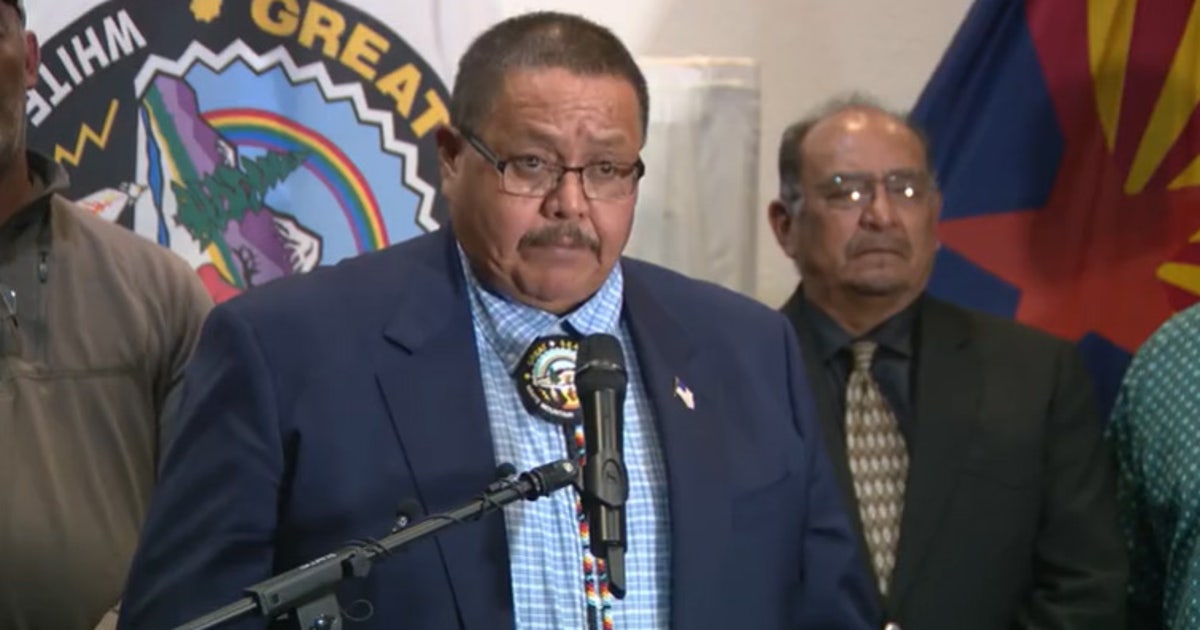
It's clear now. The former tribal chairman is Kasey Velasquez. I say "former" because the White Mountain Apache Tribal Council voted unanimously to fire him, due to credible allegations of sexual misconduct.

It had nothing to do with casinos.

So, this was not an example of Native Americans criminally exploiting their positions inside the casino business.


Also... from the American Enterprise Institute:

That's from the second link you posted. It is an opinion piece from the American Enterprise Institute - written in 2004.

First, we should recognize that the AEI has nothing to do with law enforcement, and does not represent Native Americans, nor are they primarily focused on Native American interests. They are a conservative political think tank.

This should raise red flags right away, since it seems like another attempt to sneak politics into the discussion. But let's ignore that for now.

The entire purpose of this article is to advocate against native sovereignty. Literally: the title of the piece is "The Festering Problem of Indian 'Sovereignty'".

Casinos are only part of what is mentioned. They are also upset that tribal nations don't pay state taxes, so can sell things like cigarettes tax-free.

They are especially upset that Native American tribes are gaining political power.

I would address the claims made in that article, but they only give bare assertions without any reliable sources. And since the article is over twenty years old at this point, it would be difficult to check if what they said used to be accurate.

The only "sources" they have are quotes (also non-sourced) from people like:
  • Jeff Benedict, president of the Connecticut Alliance Against Casino Expansion, and the author of 2001's Without Reservation.
  • Brett Fromson, author of 2004's Hitting the Jackpot, who calls the Pequot tribe "the greatest legal scam".
  • Scott Peterman, president of Upstate Citizens for Equality, a group that was formed specifically to oppose the Oneida Indian Nation's tribal claims.
    And a group which, according to Wikipedia, "every Native Nation located in the vicinity of New York State and other tribes represented by the United South and Eastern Tribes (USET) views as an anti-Indian hate group." (https://en.wikipedia.org/wiki/Upstate_Citizens_for_Equality).
  • Barb Lindsay, of United Property Owners and One Nation, both organizations that used to directly oppose sovereign issues (https://indianz.com/News/2005/009150.asp or http://www.onenationunited.org).
    To quote the article: "The true meaning of sovereignty, Lindsay says, is tax evasion."
They don't quote a single person who represents Native American interests.

Now, I'm sure you read the sources I posted, right? Here's a quote from one:

This article attempts to chart the contours of this stereotype and argues that it suggests Native Americans are once again being portrayed as a threat - the Ignoble Savage of the past posed a threat of violence, while the contemporary Casino Indian image, which articulates with both racist and classist discourses, reflects the fear of Native Americans as an economic and political threat.
The AEI article pretty much proves that article correct.

To sum up, what you provided was:
  • Five news articles which do not show criminal Native American casino operators.
  • Two news articles which do show criminal Native American casino operators - over twenty years apart.
  • One political op-ed, which used as a source at least one person in charge of what is considered "an anti-Indian hate group."
This does nothing to justify the belief that the "Casino Indian" trope might be accurate, if that's what you were going for.

Thanks for proving my case!
 
Not "for me."

You keep thinking that what you're arguing against are just my opinions.

The "Casino Indian" stereotype is not my opinion. The character of the Duke, as expressed in the game files, is not my opinion.


Excellent idea!

Indictment in connection with Twentynine Palms Band casino

This is a 2012 story about a (non-Native) lawyer who was hired by the Coachella Valley Indian Tribe, and how he conspired with others to defraud the tribe. It basically involved convincing the tribe to hire his co-conspiraters, after which they would give him kickbacks.

This was not an example of Native Americans criminally exploiting their positions inside the casino business.


USDOJ: US Attorney's Office - WAW

This is a 2007 story about the "Tran Organization" conspiring to cheat casinos across the country out of millions of dollars. Many of them were tribal casinos, but many were not. The scheme involved bribing card dealers to create "slugs" and "false shuffles" so they could count cards easier. None of the "Tran Organization" themselves worked for any of the casinos.

This was not an example of Native Americans criminally exploiting their positions inside the casino business.


Tribes Discover The Two Sides Of Gambling Coin Corruption Following Prosperity's Footstep Onto Reservations

This is a 1996(!) story about the in-fighting and internal struggles of various tribes to deal with the management of their then-new casinos. Yes, there was a lot of mismanagement and corruption - thirty years ago - but even the article itself suggests it did not apply to the majority of native casinos.

A lot has changed in thirty years. For example, that was before the formation of the Indian Gaming Working Group in 2003: https://www.nigc.gov/wp-content/uploads/2025/02/2004-2-.pdf (PDF)

But, though it was thirty years ago, this was an example of Native Americans criminally exploiting their positions inside the casino business.


Former Tribal Casino Supervisor Pleads Guilty to $300K Embezzlement

This is a 2021 story of a front desk manager who, over many years, embezzled hundreds of thousands of dollars from a casino run by the Bois Forte Band of Chippewa. The tribal police significantly assisted in the investigation.

Though she worked at the casino, she apparently was not Native American:

So, this was not an example of Native Americans criminally exploiting their positions inside the casino business.


Guilty: Former Paskenta Tribal Leaders Admit Stealing Casino Money

This is a 2019 story about former tribal leaders in the Paskenta Band of Nomlaki Indians who, in the words of an IRS agent, "used the Tribe's accounts as their personal piggy banks." It seems to be a straightforward embezzlement case.

So, this was an example of Native Americans criminally exploiting their positions inside the casino business.


Dealt in the desert: Operation Royal Flush and Arizona’s gambling past | Arizona Capitol Times

This is a weird article.

The 2025 gaming-related arrests, called Operation Royal Flush, had absolutely nothing to do with casinos, tribal or otherwise. It involved 31 suspects across 11 states, including NBA players and members of La Cosa Nostra. The crimes were complicated fraud schemes at illegal high-stakes poker games.

Here's the DOJ's press release:

But the article, for whatever reason, lumps this in with a 1992 standoff between the Yavapai Nation and federal agents trying to seize their slot machines. This turned into a three-week protest and sit-in, and eventually involved Native Americans from other tribes. Afterwards, the governor agreed to a compact with the Yavapai, which meant they were cleared to have slot machines (though the original machines were still confiscated).

Here's another account of that incident:

Other than gambling, the two incidents are completely unrelated.

So, this was not an example of Native Americans criminally exploiting their positions inside the casino business.


This Arizona tribal chairman is the subject of a federal probe. But it’s unclear why

It's clear now. The former tribal chairman is Kasey Velasquez. I say "former" because the White Mountain Apache Tribal Council voted unanimously to fire him, due to credible allegations of sexual misconduct.

It had nothing to do with casinos.

So, this was not an example of Native Americans criminally exploiting their positions inside the casino business.


That's from the second link you posted. It is an opinion piece from the American Enterprise Institute - written in 2004.

First, we should recognize that the AEI has nothing to do with law enforcement, and does not represent Native Americans, nor are they primarily focused on Native American interests. They are a conservative political think tank.

This should raise red flags right away, since it seems like another attempt to sneak politics into the discussion. But let's ignore that for now.

The entire purpose of this article is to advocate against native sovereignty. Literally: the title of the piece is "The Festering Problem of Indian 'Sovereignty'".

Casinos are only part of what is mentioned. They are also upset that tribal nations don't pay state taxes, so can sell things like cigarettes tax-free.

They are especially upset that Native American tribes are gaining political power.

I would address the claims made in that article, but they only give bare assertions without any reliable sources. And since the article is over twenty years old at this point, it would be difficult to check if what they said used to be accurate.

The only "sources" they have are quotes (also non-sourced) from people like:
  • Jeff Benedict, president of the Connecticut Alliance Against Casino Expansion, and the author of 2001's Without Reservation.
  • Brett Fromson, author of 2004's Hitting the Jackpot, who calls the Pequot tribe "the greatest legal scam".
  • Scott Peterman, president of Upstate Citizens for Equality, a group that was formed specifically to oppose the Oneida Indian Nation's tribal claims.
    And a group which, according to Wikipedia, "every Native Nation located in the vicinity of New York State and other tribes represented by the United South and Eastern Tribes (USET) views as an anti-Indian hate group." (https://en.wikipedia.org/wiki/Upstate_Citizens_for_Equality).
  • Barb Lindsay, of United Property Owners and One Nation, both organizations that used to directly oppose sovereign issues (https://indianz.com/News/2005/009150.asp or http://www.onenationunited.org).
    To quote the article: "The true meaning of sovereignty, Lindsay says, is tax evasion."
They don't quote a single person who represents Native American interests.

Now, I'm sure you read the sources I posted, right? Here's a quote from one:


The AEI article pretty much proves that article correct.

To sum up, what you provided was:
  • Five news articles which do not show criminal Native American casino operators.
  • Two news articles which do show criminal Native American casino operators - over twenty years apart.
  • One political op-ed, which used as a source at least one person in charge of what is considered "an anti-Indian hate group."
This does nothing to justify the belief that the "Casino Indian" trope might be accurate, if that's what you were going for.

Thanks for proving my case!
Ok, then I guess it's like you say: there's NO native American crime around Casinos and native Americans are mostly saints.
We should put some other bad white guy there to run the Casino racket, maybe an Italian Mafia guy would work for you? :unsure:
 
Ok, then I guess it's like you say: there's NO native American crime around Casinos and native Americans are mostly saints.

OK, so we moved past arguing against the game plot, or whether it matches any previously-existing negative racial stereotypes, and are now arguing against straw men.

I never suggested anything of the sort.

What I was originally talking about - clearly - was that tribal casinos were never affiliated with organized crime, in the same way that casinos in Las Vegas or Atlantic City used to be. They were never funded by the mob, never hired mobsters, and were never controlled by people like Bugsy Siegel or Meyer Lansky.

You know, people who were violent murderers, organized a gang of criminals, and ran protection rackets. People like the Duke.

EDIT: Just to back up my claim about organized crime never successfully infiltrating native casinos, here's the Statement of Bruce Ohr of the DOJ, testifying before Congress in 2001:

It was true as far back as 2001. I have never found any source that said things changed.
 
Last edited:
This is not a documentary. Its a game.

Yes, it is. If it were a documentary, it couldn't feature a "Casino Indian" organized crime lord like the Duke, since they don't exist.

But more to the point: Do you think that fiction is immune from racial criticism? For instance, do you think that nobody should have complained about the Mr. Yunioshi character in Breakfast at Tiffany's?

If not, then what's your point? I've presented reliable sources and in-game text that demonstrate the Duke is just as much a negative racial stereotype as the Mr. Yunioshi character. What's the difference?
 
What I was originally talking about - clearly - was that tribal casinos were never affiliated with organized crime
I beg to differ:

"The Seminole Hard Rock Hotel & Casino in Hollywood, for example, opened in 2007 with Class II games; IGRA stipulates for tribes to offered real slots (defined as “Class III”) they needed a “compact” with their states. The Seminoles and Florida Governor Charlie Crist arrived as such a compact in 2010.

Mitchell writes of the early bingo days, especially, being managed by mob-related companies, who knew how to skim profits and even weight wheels so certain numbers would appear more often.

He also notes that because tribes lacked the funds to boot up a bingo operation, mob money came into play, in the form of investors and management contracts. For example, the Seminole bingo hall in Hollywood opened in 1979 thanks to $1 million from Miami Beach businessman Jack Cooper. Mitchell connects Cooper to Meyer Lansky, who had mob associations with casinos nationwide. Mitchell also connects startup funding in California and elsewhere with organized crime.

And with such big money now in play, suddenly a lot more people discovered their Native American roots. Mitchell writes chapters of “fake tribes” and “fake reservations,” all angling to set up casinos. Most notable is the Foxwood Casinos in Connecticut, which Congressmen challenged as a legitimate tribe, only to be ignored.

Throughout the book, Mitchell also points out the apathetic attitude of Congress, although, to be fair, many states had no Indian tribes, hence, no dog in the fight. But with more states than not now allowing commercial casinos – who face restrictions their Indian competitors don’t have – we now understand better how the Indians maximized the cards they were dealt."

"In a 1997 prosecution, seventeen people faced charges ranging from money laundering to bribery, including a former member of the Rincon tribal governing council and five people tied to the Pittsburgh mob. The Rincon had hired an investment consortium called the Columbia Group, which was a front for the mob, to start up and run their casino.

And crucially: the Rincon Tribal Council's earlier brush with organized crime, ten years prior, had also resulted in convictions — one tribal member and nine Chicago mafia figures were convicted in 1993 of racketeering, extortion and other charges."

So, basically, in the same tribe, on two separate occasions, at least two tribal members were convicted alongside organized crime figures, not as victims, but as active participants in the organized crime.

Now, that's only about Casinos, but if you want I can name other cases of organized crime native (pun intended) of the native Americans.
 
Last edited:
organized crime lord like the Duke
Where is it defined that Duke is an organized crime lord, and not just a leader of a tribe? You're defending "organized crime as an outside influence" on the tribe isn't possible, while skipping both
- that a tribe could become "organized crime" themselves; and
- the 7DTD Duke doesn't need to be "organized crime" to run a post-apocalytic tribe, whether they're using a casino as a stronghold or not.

Basically, it isn't too far from: "the tribes aren't Italian Mafia, so they must be innocent". Which sounds inane without quite a few leaps in logic.
 
I beg to differ:

I haven't read that book. I'll see if I can pick it up.

But, we should probably also follow the advice of this reviewer:

...and "see The State of Native Nations [by the Harvard Review], Indian Gaming by Dale Mason, Indian Gaming by Light and Rand, and almost any other book written on Indian Gaming."

I also found this review (or more accurately, fact-check) of the book, which was written by someone who claims to have actually worked with tribes about casinos, and quotes others who were. But I can't verify that, so take it with a grain of salt.
https://www.allpointsintel.com/wampum.php

Does that mean the book is false? No. But by that same token, just because it's claimed in one book does not make it true. Especially if it contradicts other sources on the subject.

So, basically, in the same tribe, on two separate occasions, at least two tribal members were convicted alongside organized crime figures, not as victims, but as active participants in the organized crime.

...and were arrested before the casinos could be infiltrated. (Also, as far as I can determine, only the second case involved a member of the tribe.)

Nobody claimed they don't try. They don't succeed, and even those who try are relatively rare.

This is why Ohr said "The Department has found no evidence of a systematic infiltration of Indian gaming by elements of organized crime."

By the way - and this is not just addressing Jost - I want to bring up something that might have been missed in all this talk about tribal casinos and organized crime.

In the game, the Duke's casino wasn't infiltrated by organized crime, and he isn't working with an outside organized criminal agency.

The Duke, himself, is the leader of organized crime. He, himself, is a person like Bugsy Siegel or Meyer Lansky. He is the one who organizes protection rackets; he is the one who kills people; he is the "big bad" behind all the organized crime in the game.

It's not merely associating tribal casinos with organized crime; it's presenting Native American casino owners as organized crime bosses.

Was the Duke an organized crime boss before the apocalypse, or only afterwards?

Here are the quotes in the game files that describe the Duke before the apocalypse:
  • "The most powerful man in Navezgane before the war was an ambitious, crooked Native American of Apache decent named 'Duke Cassadore'" - general trader dialog
  • "Me and the Duke go way back. I used to gamble at his casino before the s--- hit the fan." - Trader Rekt
  • "The Duke owned a casino before the apocalypse started. He's been rigging the game his entire life." - Trader Jen
So, he was already a boss, who "owned" of a casino, and he was already "crooked" and "rigging the game." While there is nothing that explicitly says he was a criminal, there is also nothing that suggests he changed after the apocalypse.

Noah certainly didn't. His main bad trait is his cheapness with money, and he had it before the apocalypse:
  • "I owned a sporting goods chain before the apocalypse. Noah used to come in and buy everything on clearance." - Trader Joel
 
Last edited:
Three lines of dialog, establishing he was "crooked" .. as "rigging the game" isn't a claim of anything past having a zero on a roulette wheel.
Crooked = Organized Crime Lord?

I think we're still missing a few steps. Quite a few. He might've been the 'poster boy' for the casino for all we can decide from that.
 
The Duke, himself, is the leader of organized crime. He, himself, is a person like Bugsy Siegel or Meyer Lansky. He is the one who organizes protection rackets; he is the one who kills people; he is the "big bad" behind all the organized crime in the game.

Agreed. It is the Duke character himself. There’s no organized crime and his actions don’t reflect upon all casino managers who run things for the tribal owners.
It's not merely associating tribal casinos with organized crime; it's presenting Native American casino owners as organized crime bosses.
No it’s not. It’s just this one corrupt individual who you just admitted has no connection to organized crime. He’s unique. The exception to the rule.

Was the Duke an organized crime boss before the apocalypse, or only afterwards?
Who can say? But, regardless, it isn’t a statement about all tribal casinos.

Here are the quotes in the game files that describe the Duke before the apocalypse:
  • "The most powerful man in Navezgane before the war was an ambitious, crooked Native American of Apache decent named 'Duke Cassadore'" - general trader dialog
  • "Me and the Duke go way back. I used to gamble at his casino before the s--- hit the fan." - Trader Rekt
  • "The Duke owned a casino before the apocalypse started. He's been rigging the game his entire life." - Trader Jen

Objection, your Honor. Hearsay.

Lines by characters aren’t necessarily the gospel truth. They are the perspectives of those characters. People who lose at casinos often accuse the casinos of being crooked because how else could they have lost?

Why trust Jen, Rekt, Hugh, and Bob at their word? I don’t trust them. The Duke is probably a great guy.
 
Back
Top