Plane parts: A ten-minute study.

FramFramson

Survivor
Okay, you got me, I spent longer than ten minutes on this, but I'm kinda slow, so, ya know.

Anyway...

So, I think it's good to start from the premise that as much as possible we'd like to use in-game blocks to build planes from. After some screwing around the day before yesterday, and seeing Fluffy Panda and I had ended up in the same place (weird bulging plate sides), I was getting worried nothing would work without a large number of custom blocks, but I went back to the basics of a simple round fuselage instead of trying to get fancy and that actually seems closer to what we need for the bulk of an airplane.

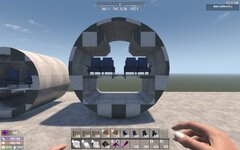
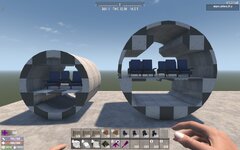
At the most basic level, we can look at cross sections using the 7m and 5m round parts. 7m works pretty well for a generic regional plane, and 5m seems perfect for a personal/corporate jet or commuter plane (checkered paint is just for block visibility):
20260715230840_1.jpg

They each have some pros and cons,

- Blocks can be removed from the lower hull to allow for open hatches (cargo/luggage loading, wheel wells, etc.)
- Wing roots can also be built using existing blocks and I think existing blocks are acceptably fine for wings and tail elevators. Rudder's a problem but we'll get to that.
- I haven't built any to check, but landing gear is probably fine to make with existing blocks. FluffyPanda had several good configurations.
- Both have two decks of play, though The 5m has far less room for interesting contents and you have to crouch to make your way through it. On the other hand, the 7m hull allows the player to stand as long as the dividing floor is no thicker than a pole plate).
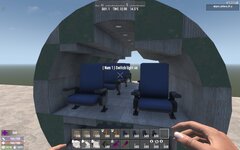
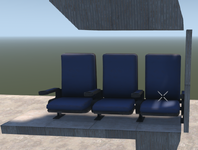
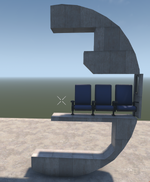
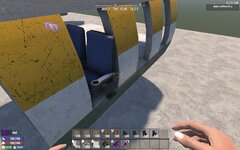
- The 7m has a significant problem with the seats sitting too far from the hull (or, alternately, not being able to cram a third seat in there), most of the solutions require a new seating block or a variant of an existing one. Ideally, I'd love to be able to just offset the seats a half-block, so the space wouldn't be wasted. You could have a wider corridor (affording better play opportunities) or a 2/3 seat arrangement.
20260715051812_1.jpg

(argh)

...that being said, if this was the only problem, I wouldn't let it hold me back at all.

- The space between seats give you enough space for sleepers, though the overall cramped cabins means you can't go very heavy on these (in case of navigation issues). Real knife-fight space in here!
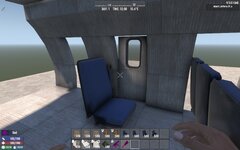
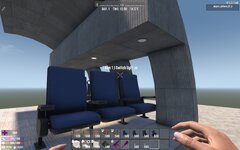
- There's more than adequate space to add the small round lights in both, solving lighting. The 7m can mount them under the overhead bins if you alternate them with the seats. The 5m will fit nicely on the central ceiling if you use the offset ones, which lineup perfectly with the ceiling height. The 7m lacks central lights, unless you accept they will float a bit (not really dire).
20260715053046_1.jpg

(ooh, neat!)

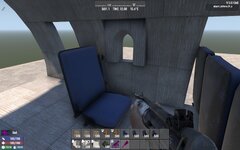
20260715061109_1.jpg

(you can see me experimenting with overhead shapes in the 5m here)

- There's space to add trim sheets to the carpet in the central corridor, though I don't think there's an "opposite edges" trim. Could make interesting angled designs using the lane marker sheets though.
- Overhead bins are purely cosmetic, but the 7m does allow one full block and a half-block (two full blocks looks like ■■■■, sorry) there so maybe something could be done with existing blocks.
- Only the 7m offers enough space to afford a real opportunity for traps or interesting play on its own, but presumably a smaller jet would just be part of a bigger whole in terms of a POI. THAT SAID, a 5m whose interior is kitted out Learjet style as opposed to a cramped commuter plane might offer nearly as much space for play. Anyone wanna raid Karen Higashi's private jet?

Overall each are viable, at least for the fuselage (which, importantly, is the bulk of the plane, especially as a playable volume). Except for one BIG problem you've probably spotted by now: Windows.

(cont'd next post)

EDIT: Okay, I have to wait long enough for the posts not to be merged or it gives me a too-long error no matter how much I shorten the second part (which is already shorter than the first).

lol, lmao, etc.
 
Ideally, I'd love to be able to just offset the seats a half-block
That's very easy if you want to make a custom block. :)

Anyhow, I like what you've done with that. The trick now is the cockpit. I'm guessing wings and tail might not be too hard, though shrinking the tail end into the tail from the 5m or 7m circle would also be a problem. Might need to do a broken plane, where you have the fuselage as one piece and the cockpit and tail as broken off pieces.
 
For the cockpit you could use the industrial electric panels, they look pretty similar to a cockpit panel with all those buttons and levers.
For the airplane cloche it may be more... complicated. :unsure:

Nice job by the way! :)
 
The site really hates the rest of this for some reason. Keep getting "too long" even though the first post was the majority of both text and images. Going to try further subdivision...

EDIT: Okay, even one more pic and a single paragraph is "too long"??? What? Do I need a new thread for the rest of this?

For the cockpit you could use the industrial electric panels, they look pretty similar to a cockpit panel with all those buttons and levers.
For the airplane cloche it may be more... complicated. :unsure:

Nice job by the way! :)

Yeah, a cockpit interior is fairly straightforward whether you have 3 or 5 blocks of width to work with.
 
Last edited:
Okay, let's try this again.

Windows. Windows are the main reason why I haven't bothered trying to make any plane POIs.

The big stumbling block for a fuselage is a window block. Both Panda and I ended up with very clunky planes by trying to build around existing window blocks using a wide variety of blocks which only kind of work together, and it just doesn't work. Better to use the more appropriate round blocks to create a good looking body (hur hur hur), and add a new window block, than a bunch of new blocks to accommodate existing windows.

Anyway, to give you some vague idea of what a dedicated window block should look like, here's the two closest analogues:

20260715052003_1.jpg20260715052151_1.jpg

If you wanted to get really fancy you could make a two-part block, but that honestly seems kind of unnecessarily extravagant.

I should also mention doors here. The existing steel doors actually work reasonably well for aircraft doors, but one actually intended to fit the curved surface would be much better. In the end could make a plane without new door blocks, but not without a window block.
Post automatically merged:

Okay, that worked. Last part in a little bit.
 
In my opinion you're approaching this the wrong way.

You should make the airplane fuselage NOT round, but slightly oval and put two straight normal blocks at the level of seats and windows.
That way you can fit all types of windows and doors where they're needed and still close the shape flawlessly.

Who cares if the fuselage shape isn't perfectly round?
Also, bigger airplanes like the Boing 747 and such have elongated round shapes anyway.

1784187694778.png
 
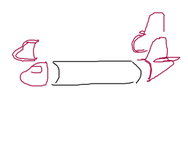
So, cockpit and tail. Not many images here, because there's not much to work with.

These are harder than moving a chair or making a single arc-section window or door.

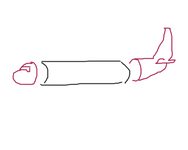
There's basically three options (but you can also do half #1 and half #2). All of them involve ending in such a way that they can line up with either a 5m or 7m tube depending on what you're making. So, basically each would end with a big, flat circle.

1) The most basic would be to just copy the system used by semi-trucks in the game, a single, opaque block with no intrinsic play value (maybe they could be searchable containers from the flat side inside the plane). A cockpit block with no interior and a tail (which should include a rudder and probably the elevators too for simplicity's sake) which is the same.

1784185818051.png

In this case you are adding the absolute minimum number of new blocks, but at the cost that all the interesting parts of the POI would be in the main hull. No cockpit full of zombie pilots, no DB Cooper escape hatch (which I might add might be good on a military plane!)

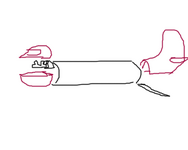
2) The next option is two-part clamshells, like a sightly more complicated version of the shipping container parts.

Assuming there's no huge gaps inside, you can build the interiors out of blocks, maybe even extra parts like a tail ramp. There a couple ways you could do a pair of clamshell parts. The most basic is just a straight vertical split, but a horizontal split is also an option.

1784185997760.png
1784186011160.png

The horizontal split might let you have some more build options, including leaving off the tail bottom to build a tail ramp, but a vertical split would let you widen a plane (assuming you can match the vertical curve of the cockpit and windscreen with existing blocks), so you could make something fat like a Hercules, which would be a good military option! Though hard to get both at the same time. The widening does run into the problem of tail centering, so in that case you might need the tail parts to stay separate. I think horizontal is the safer option here, but only modestly so. Then there's the #1/#2 split option where you have a 2-part cockpit you can build the interior of, but a 1-block tail.

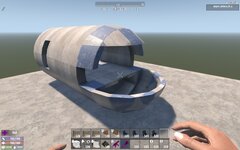
3) The last option is to add a whole bunch of new blocks (not necessarily all 1x1 though), to have a more truly modular build. To be honest, I think this is probably too clunky and not worth the time of making and adding the new blocks, but it IS an option!

A starting point could be something like what I did here, offsetting the two sections of 5m dome by 1 block and designing blocks to full the gaps

20260715063514_1.jpg

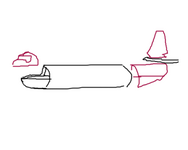
Or an in-between version, something like

1784186692754.png

But the big problem here is that there's no 7m dome. I would love one for other reasons, but asking for that seems a bit much (but so does any version of option #3).

I'm not worried about making crashed versions, because we already have a great selection of broken plate parts to press into service here. Not that I would say no to a few curved damaged parts, but that's pretty unlikely!

So the options range from adding as few as 3 blocks per plane to adding a whole bunch of new ones. I feel like 6 would be great (window, door, tail, 2-part cockpit, offset seat for the 7m version), as that gets you like 85% of the way to the best-case, and anything else would be gravy, but I'd love to hear other ideas or opinions.

Also, just to add there were a couple of other nice things from Panda's planes I haven't mentioned yet

- The use of portapotties for airplane bathrooms is really clever.
- Galleys are pretty easy to fit into a plane and it's trivial to incorporate actual cupboards and other loot there (coffee maker, microwave, etc.).
- The small curtains with rods are pretty useful in several spots as dividers.
- I appreciate that he put supports for the extended wingspan in by putting small blocks on the bottom of the engines and then another tiny block or some debris on the ground. Most of us know that trick, but it's still good practice for a stable POI.


Anyway, I might look at smaller planes later, or I might not. NO IDEA. Right now we've been trapped in one bedroom for a couple hours because they did an ant-spraying today and we're hiding in the one clean room out of solidarity with our cat is who rather distraught at THIS PRISON. Only 16 hours to go before we can let him out, lmao, you think I'm getting any sleep tonight? Good thing I'm not working tomorrow.
 
In my opinion you're approaching this the wrong way.

You should make the airplane fuselage NOT round, but slightly oval and put two straight normal blocks at the level of seats and windows.
That way you can fit all types of windows and doors where they're needed and still close the shape flawlessly.

Who cares if the fuselage shape isn't perfectly round?
Also, bigger airplanes like the Boing 747 and such have elongated round shapes anyway.

View attachment 40041

Couple problems with this.

First is that working off flat windows is what caused Panda and I trouble. See, unless you use a full block width for the hull, the plate windows have to be outside the curve blocks of the hull, which means now you have long rails of little filler blocks to make them join up - no curve blocks extend out to sit flush, in fact they do the opposite, coming up just short.

1784189036891.png

Then you also end up with a ton of wasted space (and it looks weird as hell inside) as you push everything up by one block.

1784189094549.png

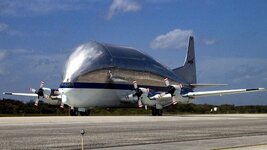
If you try to add cargo space by pushing up the deck and seats one block, guess what else you have to bring up one block along with the seats? Boom, you're back where you started again except your plane is now the Guppy.

1784190176197.jpeg

Never mind trying to merge the beginning and end of the row of window blocks into your cockpit and tail. You start grabbing angle blocks to try and make something fit and now your plane has also been designed by Picasso.

This was what I meant when I said trying to build around the existing window blocks was a big mistake. Like drawing an entire body to fit around a nose when you're not illustrating Pinocchio or Cyrano.

Beyond that, jumbo-jets (which, like most 4-engine jets, are mostly retired from commercial passenger service now anyway) or even modern wide-body planes are just too BIG FAT FATTY FATTY HUGE FAT for 7D maps. Even Panda's 747s are not even close to real 747 scale or proportions. Just look at the windows in that photo - a 7D POI in that scale would be 40+ blocks tall, never mind how long. Plus the flip side of that is that only way to make a decent looking plane is to go bigger and bigger, then you're giving up on having any smaller planes entirely.

I mean, hey, if I'm wrong, that would be great, if someone else can go into the editor and make a significantly better plane than Panda managed, I would be over the moon.

But I just don't expect that with the current block library. I've played with it for too many hours already trying to make streamlined shapes for boat prefabs, and I sincerely think that Panda already squeezed about as much as anyone could out of what we have now.
 
Last edited:
Yeah, I understand what you mean now.
The only way to fix that is to put the window block on the inside, but that would create a weird gap between the seats and the windows. :cautious:
 
Some thoughts, though this also means more new blocks...

Seats - you actually need 2 different offset blocks for this. You need a left offset version and a right offset version in order to do seats on both sides of the aisle. There is also an issue for the aisle... because of needing to offset in both directions, the aisle must be at least 2 blocks wide. And then there's also the problem where the aisle can't contain anything because the offset blocks take up that space. If you want anything in the aisle, you need at least 3 blocks wide. At this point, even the 7m size isn't really large enough. You could do offsets that are up or down as well as right and left, but then you need the space above or below, which is even more problematic. Even if the seats were a single block of offset 2 or 3 seats, you'd have the same problems because they are offset. The best option here would probably require you to have it shaped with 2 straight vertical blocks on the sides and just push the seats against the side without needing any offset, but making it look good like that would be difficult, though your example with the window that's currently not flat against the side in your example is pretty good... if you offset those seats by a plate width and the window by a plate width so the window aligns and the seats are move inward enough not to overlap the window, that could be decent looking. And because the seats offset inward instead of outward, the aisle isn't a problem.

Windows - These can be done with offsets to align with the fuselage so there isn't a gap and can be placed outside the plane, so that's really not a problem. But you do need them to be a new block that has that offset and has a shape that will align with the fuselage's round shape.
 
The issue of needing left and right is true, that's a good point.

Though the offset would still be towards the walls, so I'm not sure there's an issue with the corridor there? This will maybe help illustrate what I mean:

1784249052842.jpeg

If each seat there is pushed a half block outward, you'll get them reasonably close to the wall. So yes, you're correct that you can only have a 3/2 or 2/3 seat configuration if you technically have all floor blocks covered with an object and only use a painted carpet texture to define the floor (which is fine, IMO) or otherwise you'll have a corridor 2 blocks wide which can only accept 1 block in the middle, but that's also fine IMO. Sheet textures are a luxury here, not mandatory, and there's no lighting blocks for dual thin LED strips like they have on plane floors (which is a detail I'm not at all worried about).

Windows which are an outside block which offset towards the body of the plane would technically work, but would probably be confusing and in any case a seat placed in the outermost block still sticks out of the plane (and is half-covered by any plate you put in the hull space).

This belatedly makes me realize you can make a paratrooper jump plane out of the 5m hull by placing the seats with their backs to the walls, and not down the full length of the hull (so there's some staging space at the rear). That would be a cool military prefab!
 
Last edited:
Though the offset would still be towards the walls, so I'm not sure there's an issue with the corridor there?
Not if you're only doing the 2 rows. If you want to offset them so you can have 3 on each side, then you need to make use of the center aisle. In this example, you'd only be able to do a 2-3 arrangement instead of 3 on each side. If you want to still have the center aisle, you can only do 2-2. (You did comment on this later, but I'll leave what I wrote)

and in any case a seat placed in the outermost block still sticks out of the plane
Only if you aren't offsetting it. You can offset it so it doesn't stick out. And since you need to offset them anyhow, that isn't really a problem to offset them an amount that works.
 
Eh, I don't think 6 rows is that important. 4 or 5 is fine.

Only if you aren't offsetting it. You can offset it so it doesn't stick out. And since you need to offset them anyhow, that isn't really a problem to offset them an amount that works.

If the offset is exactly half, I suppose you can just swap directions!

In the end though, the Pimps to try to avoid offset regular blocks at all costs, so I try to keep that in mind.
 
Back
Top